
The most common mistake on safari is packing too much. You spend most of the day in a vehicle, lodges do laundry, and small planes have strict weight limits. This is the list we send our own guests, built from years of watching what people actually use on a northern Tanzania safari.
First: your bag
Use a soft duffel bag rather than a hard suitcase. If your safari includes a light-aircraft flight, for example to the Serengeti, Kogatende or Zanzibar, the limit is usually 15 kg per person in a soft bag, including hand luggage, and some airlines allow 20 kg. Hard cases may not fit in the hold. If you are travelling on to the beach or have extra luggage, we can store it safely in Arusha until you return.
Clothes
Northern Tanzania is warm in the day and cool in the early morning and evening, especially on the Ngorongoro rim at 2,300 metres, where it can drop below 10°C. Dress in layers you can add and remove in the vehicle.
- 3 to 4 light shirts or T-shirts, including 2 with long sleeves for sun and mosquitoes
- 2 pairs of light trousers (zip-off trousers are useful) and 1 pair of shorts
- 1 warm fleece or light down jacket for mornings and the crater rim
- 1 light waterproof jacket, especially from November to May
- Comfortable clothes for the evening at the lodge
- Swimwear: most lodges have a pool
- Underwear and socks for 4 to 5 days; use the lodge laundry for the rest
- Sleepwear; tents can be cool at night
What colours?
Choose neutral colours such as khaki, beige, olive and light brown. They show less dust and are calmer around animals. Avoid dark blue and black in Tarangire and parts of the Serengeti, because they attract tsetse flies. Bright white gets dirty in minutes. Camouflage clothing is not allowed for civilians in Tanzania, so leave it at home.
Shoes and accessories
- Comfortable closed shoes or light walking shoes; you do not need heavy boots unless you add a hike
- Sandals or flip-flops for the lodge
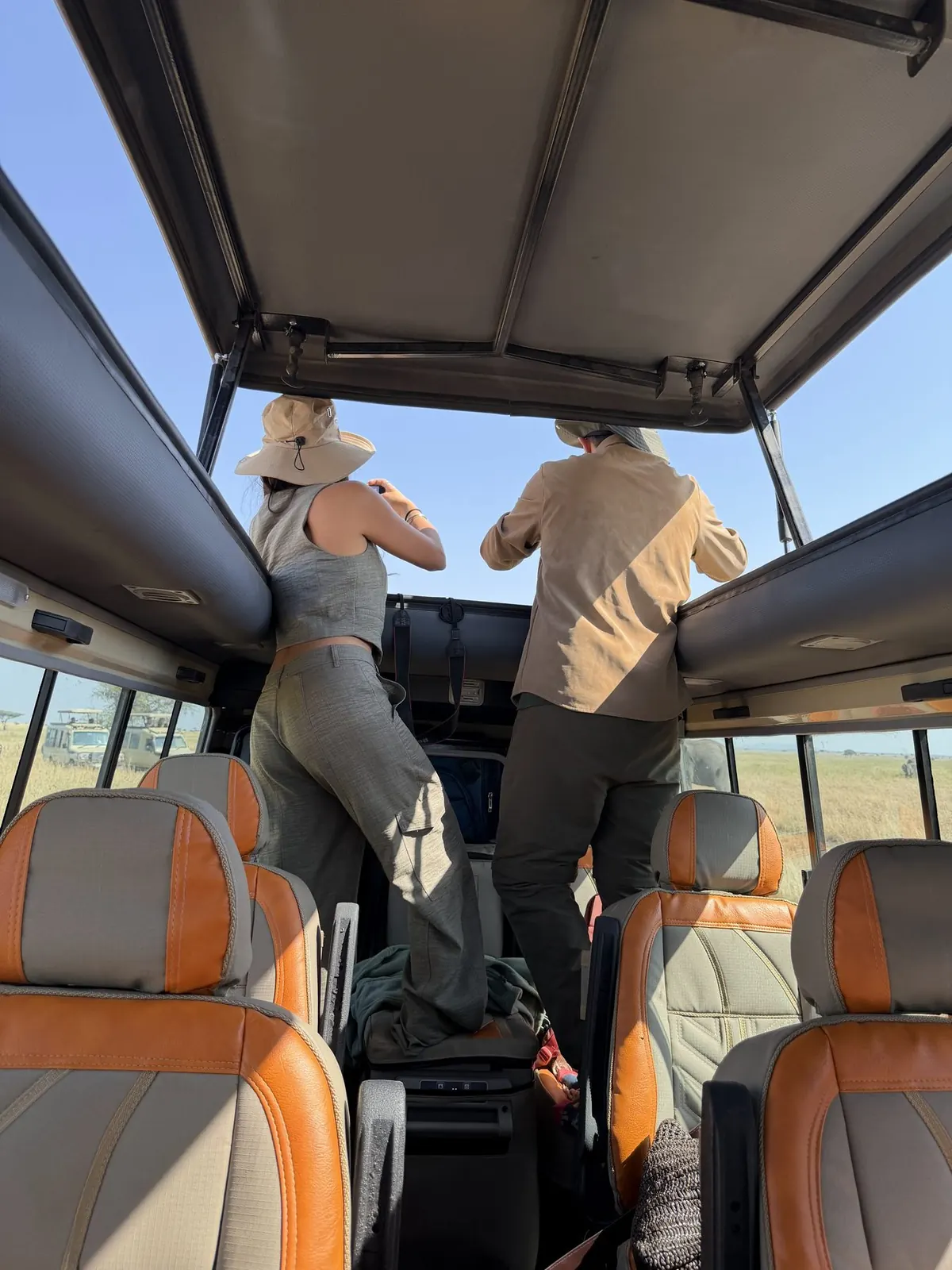
- A wide-brimmed hat or cap with a strap for the open roof
- Good sunglasses
- A buff or light scarf against dust on dry-season roads
- A small day pack for the vehicle
Camera and electronics
- Binoculars, ideally 8x42 or 10x42; one pair per person makes a big difference
- Camera with a zoom lens; 100–400 mm or similar is ideal for wildlife
- Spare batteries and memory cards; you will take more photos than you think
- A power bank; our vehicles have charging points, but lodges may have limited power at night
- Plug adapter: Tanzania uses the British type G three-pin plug (230 V)
- A small beanbag to rest a long lens on the window frame
- A dust cover or plastic bag for your camera on dusty roads
Drones are not allowed in national parks without a permit, and you need a permit to bring one into Tanzania at all, so leave yours at home unless we have arranged it in advance.
Health and toiletries
- Malaria tablets, as advised by your doctor
- Insect repellent with DEET or picaridin
- High-factor sunscreen and lip balm with SPF
- Your personal medicines, in hand luggage, with a copy of the prescriptions
- A small first-aid kit: plasters, painkillers, antihistamines, rehydration salts and something for an upset stomach
- Hand sanitiser and wet wipes
- Motion sickness tablets if you suffer on bumpy roads or small planes
Lodges provide soap, shampoo and towels. Drinking water is provided in our vehicles, so you only need a refillable bottle.
Documents and money
- Passport valid for at least six months after your trip, with two blank pages
- Tanzania visa (apply online) and, if needed, your yellow fever certificate
- Proof of the mandatory Tanzania travel insurance, required for visitors to mainland Tanzania since 1 October 2026, and Zanzibar insurance if you visit the island
- Your own travel insurance details, including medical evacuation cover
- Printed or downloaded copies of your flight tickets and our itinerary
- US dollars in clean notes printed after 2009, plus a bank card; small notes are useful for tips
Our visa and entry requirements guide explains all of this step by step, and our article on Tanzania's mandatory travel insurance covers the new $44 rule.
What not to bring
- Plastic bags: single-use plastic bags are banned in Tanzania and can be taken from you at the airport
- Camouflage clothing
- Heavy hiking boots, unless you are climbing Kilimanjaro
- Expensive jewellery
- A hair dryer: most camps cannot power one
- Too many clothes: three days' worth plus laundry is plenty
Extra items by season and trip
Green season (November to May)
A good rain jacket, quick-dry clothes and a dry bag for electronics. Afternoon showers are common but usually short.
Dry season (June to October)
A warm layer for chilly mornings, a buff against dust and lip balm. June and July nights can be cold in the highlands.
Cultural visits and walks
Long trousers and closed shoes for the Hadzabe hunt at Lake Eyasi or the Materuni waterfall walk, and modest clothes for villages and Stone Town.
Zanzibar
Reef-safe sunscreen, water shoes for coral beaches and a light cover-up for town, where shoulders and knees should be covered.
Children
A small pair of binoculars, a notebook for a wildlife checklist, snacks from home and a tablet with downloaded films for long drives. Our family safari guide has more ideas.
What we provide
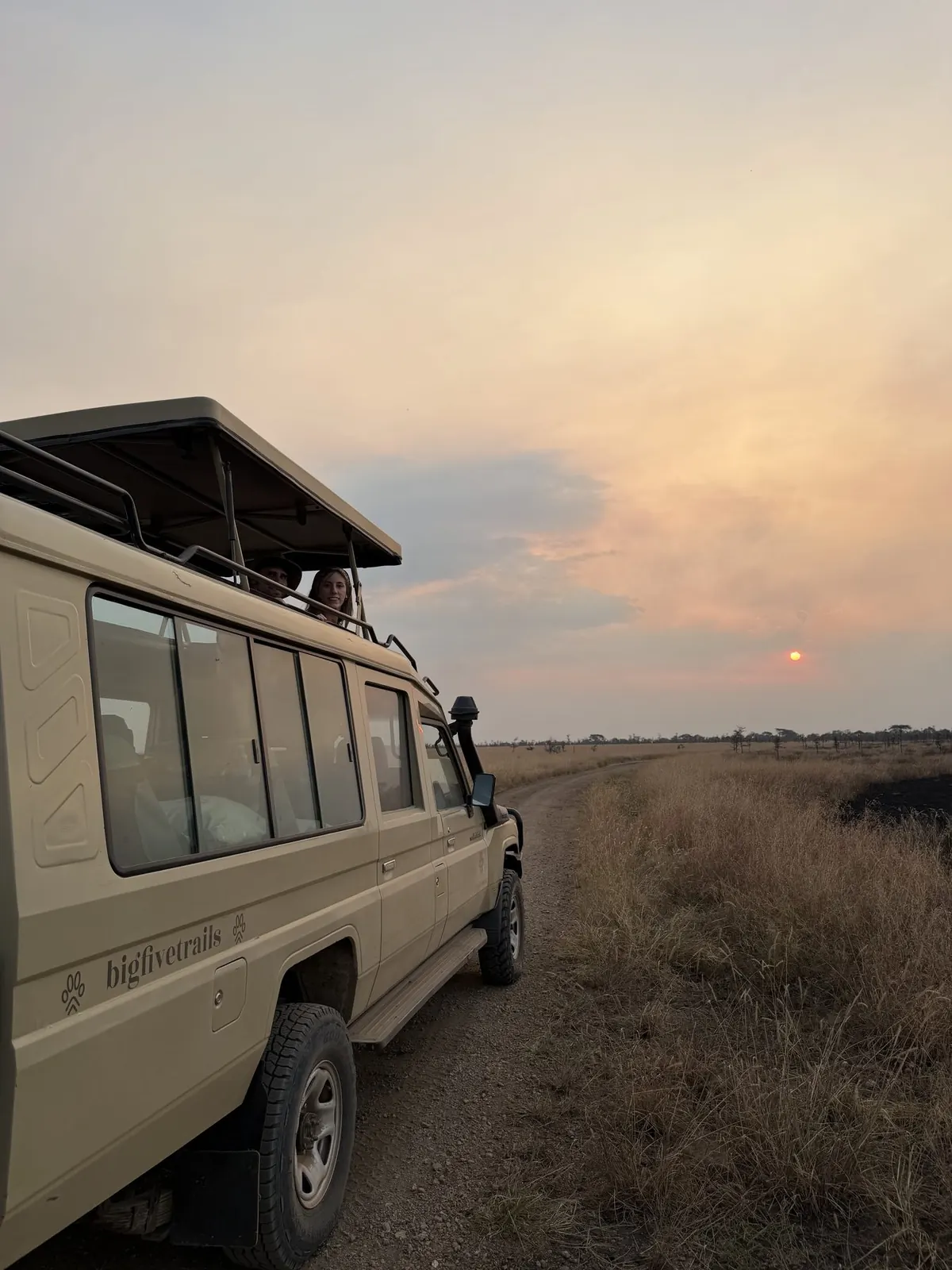
Your private Land Cruiser has a pop-up roof, a cool box with drinking water, charging points and a pair of binoculars, and your guide carries a field guide book and a first-aid kit. Lodges provide towels, toiletries and laundry (sometimes free, sometimes for a small fee). So you can pack light and still have everything you need.
Printable checklist
Passport and visa · insurance documents · US dollars and card · malaria tablets · repellent · sunscreen · hat and sunglasses · fleece · rain jacket · 3–4 shirts · 2 trousers · shorts · swimwear · walking shoes · sandals · binoculars · camera and spare batteries · power bank · type G plug adapter · small day pack · soft duffel bag.
Laundry on safari
Most lodges and camps offer laundry, often included in the price. Many camps do not wash underwear, for cultural reasons, so bring a small travel wash and do these yourself. Clothes usually come back the same day in the dry season.
Ready to plan?
Every BigFiveTrails guest receives a packing list tailored to their dates and route before they travel. Have a look at our 7-day safari or 6-day classic safari, which includes a flight with the 15 kg limit, or ask us anything on WhatsApp.
Frequently asked questions
01How much luggage can I take on a safari flight?
Usually 15 kg per person in a soft bag, including hand luggage. Some airlines allow 20 kg. We tell you the exact limit for your flights.
02What colours should I wear on safari?
Neutral colours such as khaki, beige and olive. Avoid dark blue and black, which attract tsetse flies, and camouflage, which is not allowed for civilians in Tanzania.
03Are plastic bags allowed in Tanzania?
No. Single-use plastic carrier bags are banned and may be taken from you on arrival. Use a cloth bag or a zip-lock toiletry bag.
Ready to plan?
Tell us your dates and travel style and we will shape a route around them.