
The Ngorongoro Crater is the most expensive single day on a northern Tanzania safari, and it has its own rules. Here is what the fees are, who pays what, how the time limits work and how we plan a crater day so that you get the most out of it. All prices are in US dollars and include 18% VAT unless we say otherwise.
Fees are set by the Ngorongoro Conservation Area Authority (NCAA) and can change at the start of a financial year, usually 1 July, with little notice. The figures below are the published rates in force in late 2026. When you book with us, the fees in your quote are the ones we pay on your behalf, and we tell you if anything changes.
The fees, in plain words
There are two separate charges for a crater day, plus one that depends on where you sleep.
1. Conservation area fee (per person, per 24 hours)
Everybody who enters the Ngorongoro Conservation Area pays a conservation fee, whether or not you go down into the crater. For non-resident adults it is about $70.80 per person per 24 hours. Children aged 5 to 15 pay about $23.60, and children under 5 enter free. The 24-hour rule matters: if you enter at 7 am, your permit runs until 7 am the next day.
The conservation area is also the road between Karatu and the Serengeti. That means you pay this fee again every time you drive through, for example on the way to the Serengeti and on the way back. A good quote shows each of these entries clearly.
2. Crater service fee (per vehicle, per descent)
To drive down to the crater floor, each vehicle pays a crater service fee of $295 plus VAT, which comes to about $348. This is per vehicle and per descent, not per person. Four travellers in one Land Cruiser share one fee, which is one reason a private safari for a family or a group of friends is better value than it first looks.
3. Concession fee (if you sleep on the crater rim)
Lodges and camps on the crater rim are inside the conservation area, so guests pay an extra concession fee of about $59 per adult per night, in addition to the conservation fee. Lodges in Karatu, about 30 to 45 minutes from the gate, are outside the area and have no concession fee. This is why a rim lodge costs more than the room rate alone suggests.
An example
Two adults spend one night in Karatu and go down into the crater the next morning. They pay two conservation fees (about $141.60) and one crater service fee (about $348), a total of about $490 in government fees for the crater day. Four adults in the same vehicle pay about $631, or about $158 each. If the same two adults sleep on the rim the night before, they add about $118 in concession fees and another 24-hour conservation fee.
Time limits and opening hours
- The descent roads open at around 6 am and vehicles must be out of the crater by about 6 pm.
- Rangers allow each vehicle about six hours on the crater floor. Longer stays can be charged as a second descent.
- The crater has a one-way system: you go down by one road and come up by another, so your guide plans the route around the gates.
Six hours is enough for a very good crater day. The trick is to use them well, which is why we start early.
The rules inside the crater
- Stay inside the vehicle except at the official picnic sites, such as the Ngoitoktok spring and the hippo pool.
- Vehicles must stay on the marked tracks. Off-road driving is not allowed, even for a rhino.
- Keep your voice low, do not feed animals and do not throw anything out of the vehicle.
- Black kites at the picnic sites will steal food from your hand. Eat inside the vehicle or under the trees.
- Drones are not allowed without a special permit.
- All fees are paid electronically in advance by your operator. You cannot pay with cash at the gate.
How we plan your crater day
We aim to be at the Lodoare gate when it opens and on the crater floor before 7 am. The first hours are cool and quiet, the light is soft, and lions and hyenas are still active after the night. Around 10 am most other vehicles arrive, and by then we have usually seen the rhinos on the eastern plains. We have lunch at a quiet picnic spot and climb out in the early afternoon, often before the six hours are up. You get the best of the crater, and an afternoon to rest at your lodge.
Pack warm layers. The rim sits at about 2,300 metres and mornings are cold and often foggy, while the floor at about 1,700 metres can be warm by midday. A good pair of binoculars helps with the rhinos, which are usually some distance from the track.
Is the crater worth the cost?
Yes, for most first-time visitors. In one day you can see lion, elephant, buffalo, black rhino, hyena, zebra, wildebeest, flamingos and hippos in a setting unlike anywhere else on earth. If your budget is tight, the best saving is to share the vehicle and sleep in Karatu rather than on the rim, not to skip the crater.
What you see in a crater day
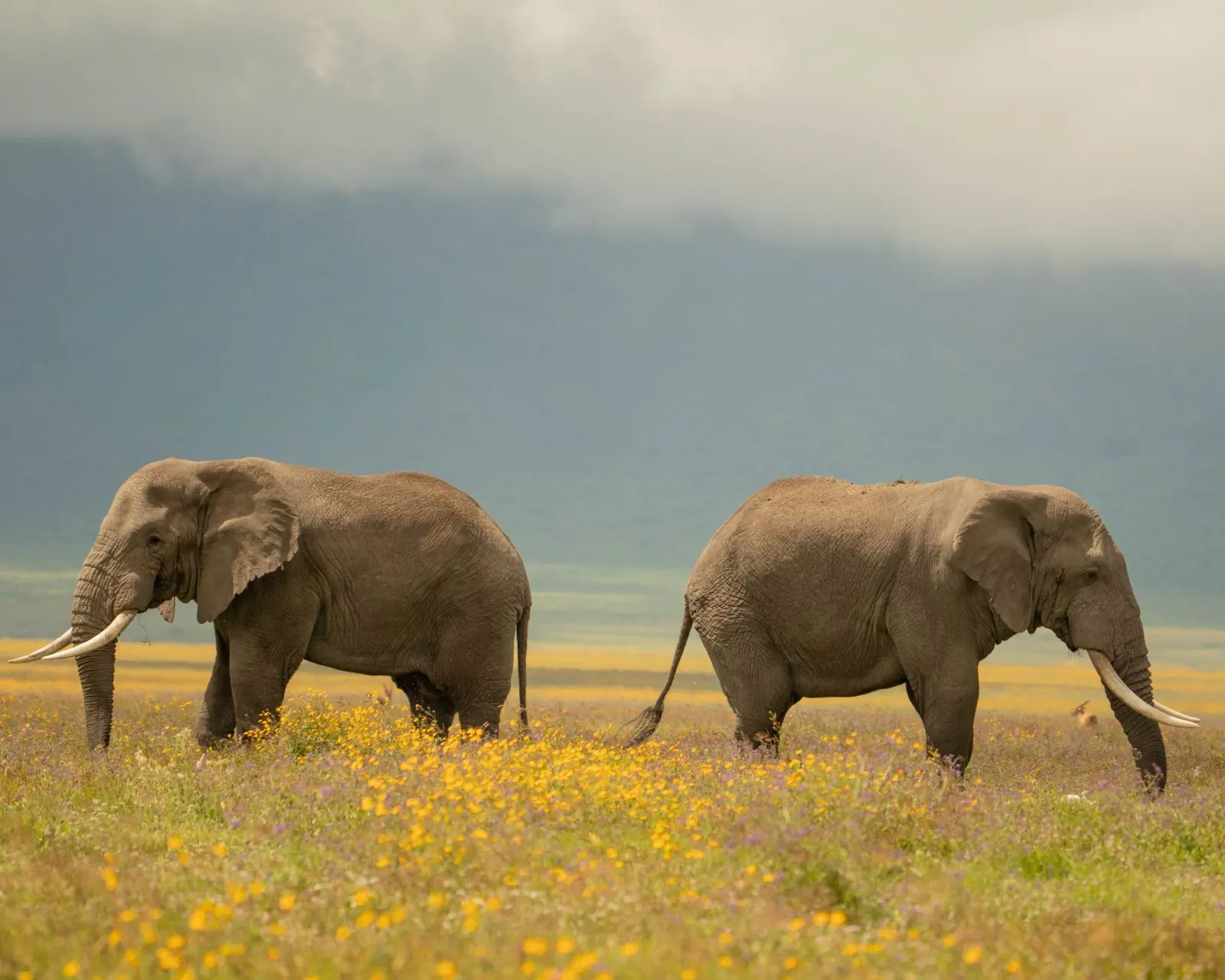
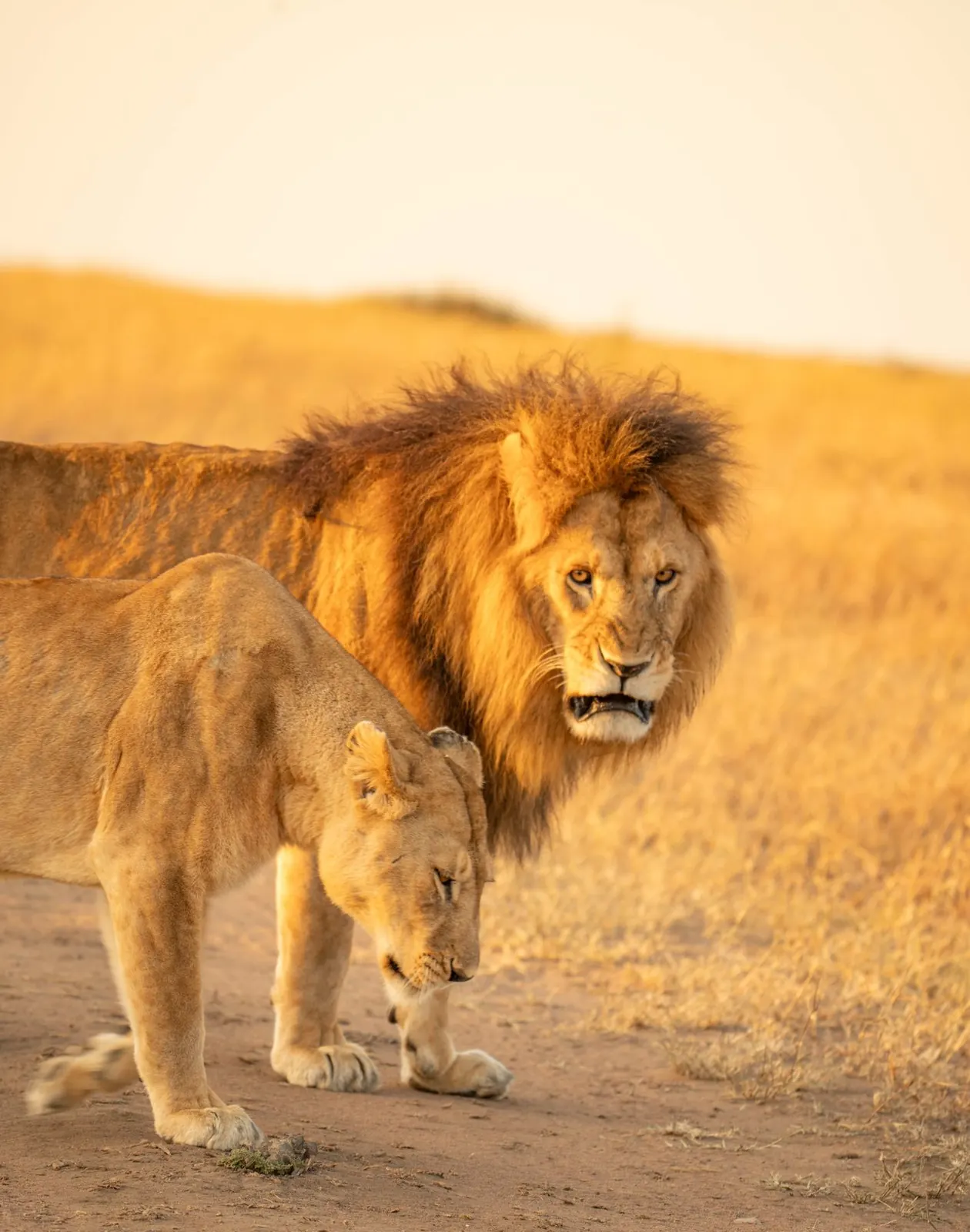
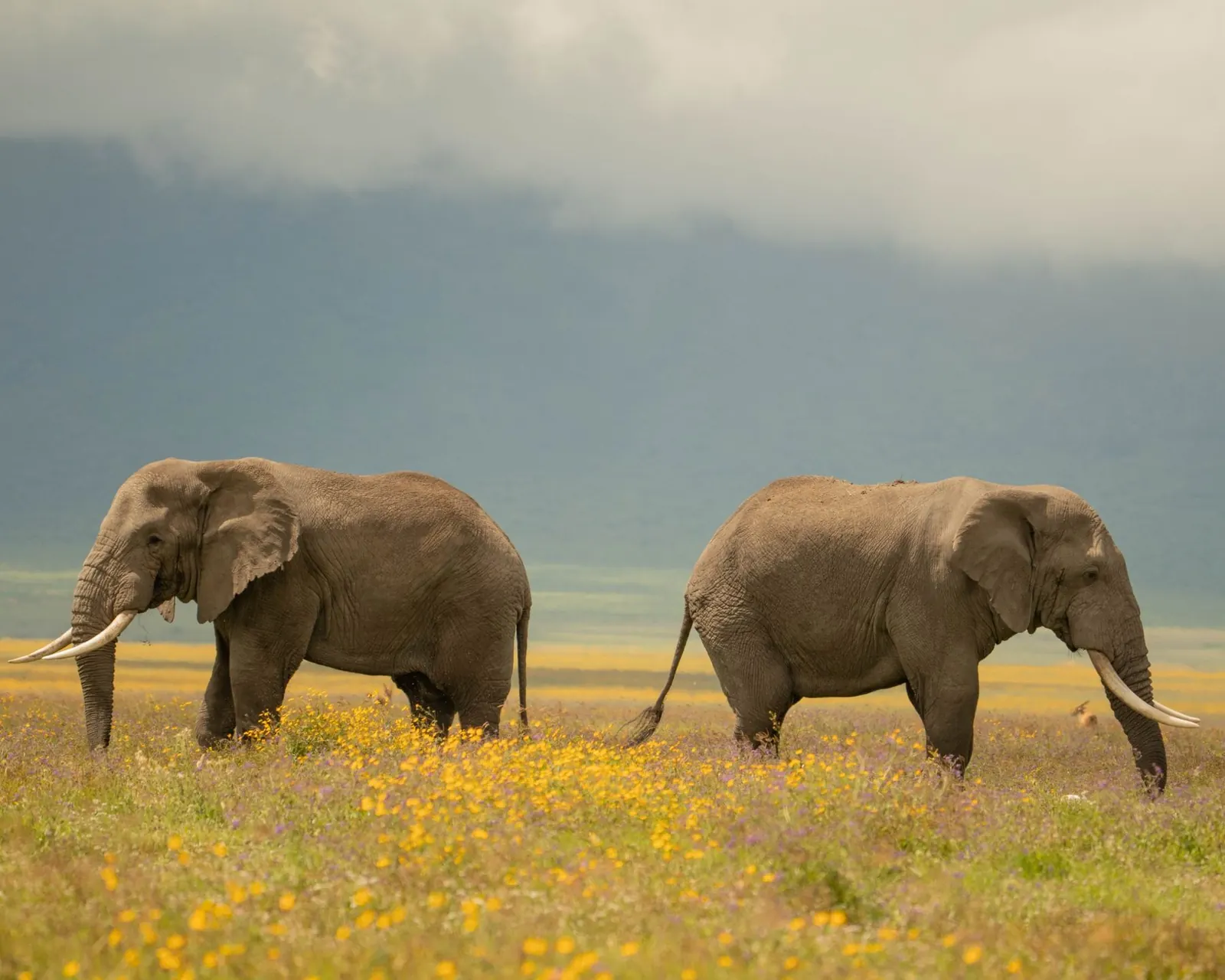
The crater floor covers about 260 km² and holds around 25,000 large animals, most of them resident all year. Because the walls keep many animals in, wildlife density is among the highest in Africa. On a typical morning you drive past herds of wildebeest and zebra, buffalo and Grant's gazelles on the open grassland, lions resting near the Munge stream, spotted hyenas around the Lerai Forest and hippos in the Ngoitoktok spring. The crater is one of the last strongholds of the eastern black rhino in Tanzania; there are only a few dozen, carefully protected, and they are usually seen at a distance on the eastern plains. Lake Magadi, the soda lake in the middle, often holds flamingos, especially in the wet season. Old bull elephants with long tusks live in the Lerai Forest. Cheetahs and leopards are present but less common than in the Serengeti.
Fees for the wider Ngorongoro area
The Ngorongoro Conservation Area is much larger than the crater. It includes the Olduvai Gorge, where some of the oldest human fossils were found, the Empakaai and Olmoti craters, the Ndutu plains and Lake Eyasi's northern edge. Visits to Olduvai Gorge and its museum carry a small additional fee. Walking safaris on the crater highlands, a hike into Empakaai crater or a visit to a Maasai boma are possible with an armed ranger and their own fees. If any of these interest you, tell us when you book and we will add them to your quote with the exact costs.
Common questions about payment
All Ngorongoro fees are paid electronically in advance by a licensed operator, through the government's online payment system. You do not need to carry cash for the gates. If your plans change on the day, for example if you want a second descent, your guide arranges the extra permit and we settle it with you afterwards. Make sure your quote shows the crater fee as a separate line; some operators leave it out of a low headline price.
Safaris that include the crater
Almost all of our northern safaris include a crater day. The shortest are our 5-day budget Tanzania safari and the 5-day luxury safari with a rim lodge. The 7-day safari combines the crater with the Serengeti. Read our Ngorongoro Crater guide for the wildlife and the lodges, or ask us for a quote that shows every fee line by line.
Frequently asked questions
01How much does it cost to enter the Ngorongoro Crater?
For non-resident adults, about $70.80 per person per 24 hours for the conservation area, plus a crater service fee of $295 plus VAT (about $348) per vehicle for each descent. Children 5 to 15 pay about $23.60; under 5s are free.
02Is the crater fee per person or per vehicle?
The $295 crater service fee is per vehicle and per descent. The conservation fee is per person.
03How long can you stay in the Ngorongoro Crater?
Each vehicle may spend about six hours on the crater floor, between roughly 6 am and 6 pm.
Ready to plan?
Tell us your dates and travel style and we will shape a route around them.